
Question: There are rumours that empty buses drive around Maple Ridge and are being heavily subsidized by those users within the City of Vancouver and other urban areas. Is this true? If buses on busy routes make money, why not put more buses on to generate revenue? How much money does a full bus make/lose vs. a mostly empty one? Which routes are the ones that pay for themselves, and which ones are the big money losers?
Answer: Here’s the truth, my friend. None of the buses makes any money. Just like tolls, as onerous as they are, don’t come anywhere near covering the cost of a bridge or a road.
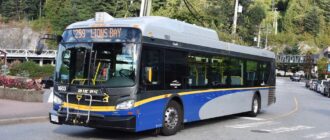
It’s hard to believe, when the B-Line these days is like a cattle car. (God forbid that one of them ever has an accident or there will be 50 people with broken legs and arms.) But it does run many trips in the non-busy hours that aren’t as full and, on average, it’s no cash cow.
The best that can be said of the 99 B-Line, according to TransLink, is that it breaks even. But many of its passengers come in from feeder lines, so if you ran only the 99-B and nothing else, even that line wouldn’t pay for itself.
The reality is that all transit and all roads are subsidized to some extent. Some routes less, some more, but fares just don’t cover the costs any more than tuition comes close to covering the costs of universities and colleges.
Your idea, however, of taking buses off the less-busy lines and moving them to the crowded ones is exactly what TransLink has been doing the last couple of years. It had been spreading service widely around the region in an attempt to encourage people to take transit. Now that various politicians plus the transportation commissioner have applied the thumbscrews, TransLink has started shifting services from what transit planners call a “shaping” model to a “serving” model.
If you were to go through the schedule changes for this September, you’d see that some lines have been reduced from twice an hour to once an hour (Ioco, Belcarra and others in that northeast sector), others are seeing their regular-size buses to reduced to community shuttles (Lake City, Lougheed), for examples. It’s a problematic thing to do because once you reduce service, the ridership plummets even more.
Others are seeing their service boosted — not always Vancouver either. Surrey is starting to see its transit use within the boundaries pick up and several routes there got extra service this fall.
But to answer your question about what’s going on in Maple Ridge, if you really wanted to know and you weren’t just choosing some suburb randomly as an example of wastefulness. TransLink is supposed to have a document available that provides the exact numbers on average load per route. It’s broken right now and they’re getting me another copy, but here is what they extracted for me.
The lowest ridership in the area is not Maple Ridge, but on several routes around the region with an average load of 2 or 3. The highest is the 99-B with an average load of 68. (Another way they count is by boardings per revenue hour, which is 190. For Metro overall, the average boardings per revenue hour is 58.)
Maple Ridge numbers are here:
C44 –avg. load 5
C45- avg. load 9
C46 –avg. load 6
C47 –avg. load 5
C48- avg. load 4
C49 – avg. load 5
701 –avg. load 24
791 – avg. load 24
Pitt Meadows/Maple Ridge adjacent:
C41- avg. load 3
C43- avg. load 24