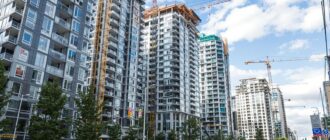

Mike Howell at the Courier has been on the case this week about why the big tract of land that Concord Pacific owns in the northeast corner of False Creek has been valued so low in land assessments, i.e. only $400,000 — less than the value of an average 33 X 120 lot in the city.
Irate local residents, who’ve been angry at Concord Pacific for over a decade because of their decision to delay building the park in that corner, have been complaining about this for a while. Their unhappiness has accelerated in recent months with Concord’s proposal to make the future park a long band along the seawall, with condo towers behind it, instead of having a big square block of park with towers clustered closer to the Plaza of Nations and BC Place.
The assessment controversy highlights a broader pattern of questionable valuations that have plagued this prime waterfront real estate. The Northeast False Creek lands, totaling approximately 80 acres of some of Vancouver’s most coveted territory, represent one of the last major undeveloped parcels in the city’s core. Given the astronomical land values in comparable False Creek developments, where single residential lots routinely sell for millions, the $400,000 assessment appears to dramatically undervalue the property’s true market potential.
Local housing advocates argue that this artificially low assessment effectively subsidizes Concord Pacific’s holding costs while the company delays promised public amenities. The developer has controlled these lands since the late 1980s following the Expo 86 legacy, yet community facilities including the long-promised park remain unrealized decades later.
The timing of this assessment dispute coincides with broader public frustration over Concord’s evolving park design. Originally envisioned as a substantial green space comparable to other False Creek parks, the latest proposals would create a narrow strip of parkland along the water’s edge, maximizing developable area for lucrative high-rise residential towers. This configuration would fundamentally alter the neighborhood’s character and density, potentially setting precedents for other waterfront developments.
BC Assessment Authority’s methodology for valuing undeveloped land typically considers factors including zoning potential, market comparables, and development timelines. However, the stark discrepancy between the assessed value and obvious market worth raises questions about whether these standards adequately reflect contemporary Vancouver real estate dynamics.
While the city is not responsible for what BC Assessment Authority does, city manager Penny Ballem has promised to look into the situation, according to Mike’s latest story. You might think there’s nothing the city can do, but in fact the city has appealed to BCAA in the past over assessments that staff thought were too low and has fought to prove that they’re worth more.
This precedent suggests the city possesses both the legal authority and political motivation to challenge assessments that appear to shortchange public revenues. Given Vancouver’s ongoing affordability crisis and infrastructure funding challenges, ensuring accurate property valuations becomes increasingly critical for municipal fiscal health and equitable development outcomes.