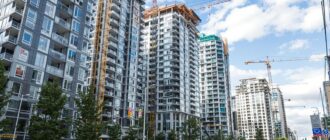

People have been waiting for four months, ever since the Olympic village went into receivership in October 2010, to see what the strategy was going to be for salvaging Vancouver’s most expensive municipal investment disaster. Rumours of bulk buyers (someone who would take the whole project off the city’s hands at garage-sale prices) abounded, while developers, real estate experts, and politicians offered conflicting sideline advice about what to do with this or that piece of the $1-billion debacle.
The receivership itself was a dramatic acknowledgment that the original sales strategy had failed spectacularly. What was supposed to be a showcase sustainable community had become a ghost town, with hundreds of empty units creating an eerie atmosphere in what should have been a vibrant neighborhood. The low occupancy rates weren’t just embarrassing—they were economically devastating, as maintenance costs for common areas were being shared among too few residents.
As my story indicates, it appears the final plan (due to be filed with the court sometime this morning) will be a carefully calibrated mix of aggressive pricing, strategic inventory management, and cost restructuring—a little this, a little that, designed to balance financial recovery with community building.
Yes, there will be substantially reduced prices: up to 50 percent discounts on a couple of premium condos, with an average reduction of 30 percent across the remaining inventory. These aren’t small adjustments—they represent acknowledgment that the original pricing was completely divorced from market reality, even in Vancouver’s then-hot real estate market.
But the strategy is more sophisticated than simple price-slashing. Some condos will be held back from sale entirely; others will be rented out rather than sold. That means not selling everything at once in desperation (so no complete “fire sale,” as some were hoping for and others were dreading), but moving strategically to get the development populated with actual residents rather than just owners.
The rental component addresses a crucial challenge: creating the critical mass of occupancy needed to make the Village feel like a real community rather than an expensive wasteland. Empty buildings don’t just look bad—they create safety concerns, reduce property values for existing owners, and make it harder to attract new buyers who want to live in a thriving neighborhood.
Perhaps most significantly for existing and future residents, the maintenance fees for both current and future buyers will be substantially lowered. This reduction comes from a decision to absorb two major cost burdens at the project level: the health club’s mortgage payments and an expensive lease on the EnerPro energy-monitoring systems installed in every suite.
These EnerPro monitors, part of the Village’s ambitious sustainability program, had become a monthly albatross for residents—high-tech devices that tracked energy usage but came with costly ongoing fees that made luxury condos even more expensive to maintain. The decision to absorb these costs represents recognition that sustainability features can’t be economically sustainable if they price out potential residents.
The health club mortgage absorption similarly addresses the challenge of maintaining amenities in an under-populated development. With too few residents to support the facility through user fees, the mortgage payments had become another burden on the already-high maintenance fees that were deterring potential buyers.
Oh, and there’s one more change that might seem cosmetic but signals a fundamental shift in marketing approach: no more “Millennium Water.” Instead, the development will be rebranded as “The Village on False Creek”—a name that emphasizes location and community over the failed developer partnership.
The name change isn’t just about distancing the project from Millennium Development’s bankruptcy. “The Village” suggests the kind of intimate, walkable community that urbanists envisioned, while “False Creek” connects it to one of Vancouver’s most successful waterfront neighborhoods rather than to Olympic legacy promises that didn’t materialize.
This comprehensive strategy represents a recognition that the Olympic Village’s problems weren’t just about pricing—they were about creating a sustainable community model that could survive the transition from Olympic showcase to actual neighborhood.