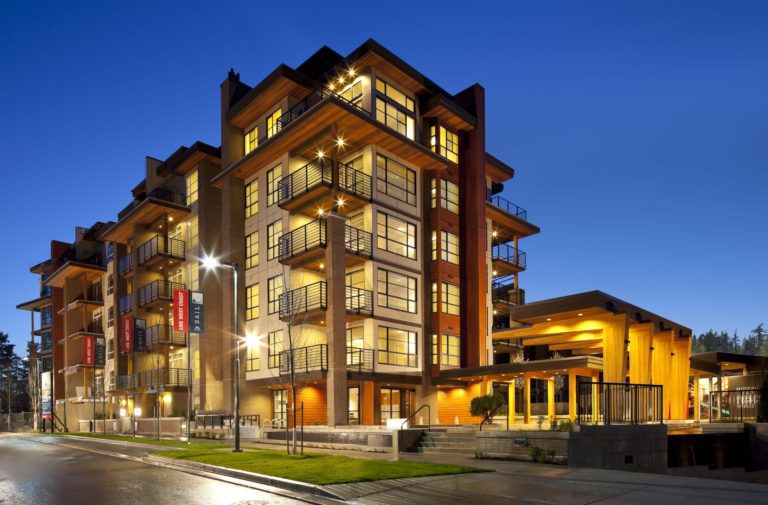
I’m a few days late in linking to this story, but it’s, as they say, timeless. Sean Holman at Public Eye in Victoria has taken a closer look at the provincial government’s move to change the law to allow wood-frame construction for apartment buildings up to the five- and six-storey level.
Currently, the limit is three, which is why you see so many apartment buildings of that height around the Lower Mainland. They’re cheap and easy to put up. Once a builder goes over three storeys, the current rule is that the construction has to be concrete. (Note: Tessa corrects me in her comments on this post, noting that B.C. actually allows four storeys.)
This is all academic now, since no one is building anything, but it will be relevant once things get going again. If it’s allowed at the same time that cities are under some pressure to allow greater density on sites by developers saying they need it to be able to break even in the current economy, the province could start sprouting six-storey apartments.
Thoughts from all my experts out in the industry?
The provincial government’s push to expand wood-frame construction limits represents more than just a technical building code adjustment—it’s a fundamental shift that could reshape British Columbia’s urban landscape while potentially compromising public safety. The Wood First Act of 2009 wasn’t merely about promoting BC’s forestry industry; it was an aggressive policy intervention that prioritized economic considerations over established safety protocols.
The current three-storey (technically four-storey) wood-frame limit exists for compelling reasons that transcend mere regulatory conservatism. Fire safety represents the primary concern, as wood-frame construction during the building phase creates particularly vulnerable conditions. Unlike completed structures with sprinkler systems and fire-resistant treatments, buildings under construction expose massive amounts of untreated lumber, creating potential firestorms that overwhelm firefighting capabilities.
The economic argument for expanded wood-frame construction is undeniably attractive. Construction costs for wood-frame buildings range from $130 to $165 per square foot, compared to $210 to $270 per square foot for concrete high-rise construction. This cost differential—potentially $100 per square foot—represents millions in savings for developers and, theoretically, more affordable housing for consumers. However, these upfront savings may prove illusory when long-term costs are considered.
Insurance implications alone should give policymakers pause. Studies indicate that insurance premiums for wood-framed buildings can be six times higher than concrete structures, reflecting actuarial assessments of fire risk, water damage susceptibility, and structural vulnerability. These costs ultimately transfer to residents through higher strata fees or rental rates, potentially negating any construction savings.
The seismic considerations in British Columbia add another layer of complexity often overlooked in policy discussions. While wood-frame construction offers flexibility that can absorb earthquake motion, six-storey structures approach the limits where this flexibility becomes a liability rather than an asset. Seismic building code provisions for mid-rise wood-frame construction require sophisticated engineering solutions that may compromise the cost advantages that justified the policy change.
Fire department concerns deserve serious consideration beyond theoretical risk assessments. Fire chiefs across British Columbia have expressed alarm about their ability to combat fires in six-storey wood structures, particularly during construction phases. Standard firefighting equipment and tactics were developed for shorter wood buildings or taller concrete structures with different fire behavior characteristics.
The density pressure argument that you mention creates a perfect storm of problematic incentives. Developers facing tight margins in the current economic climate will naturally gravitate toward the cheapest construction methods available. If municipalities simultaneously relax density restrictions to help projects pencil out, the province could witness a proliferation of six-storey wood buildings in locations where concrete construction might be more appropriate.
International experience offers cautionary lessons that British Columbia seems reluctant to heed. European countries that allow taller wood construction typically require sophisticated fire suppression systems, specialized building materials, and rigorous inspection regimes that add substantial costs. The province’s approach appears to emphasize promoting the forest industry over learning from international best practices.
The environmental argument for wood construction—promoting renewable building materials and carbon sequestration—deserves consideration but shouldn’t override safety concerns. Mass timber construction using engineered wood products differs significantly from conventional wood-frame construction in fire behavior, structural performance, and environmental impact. Conflating these technologies in policy discussions obscures important safety distinctions.
Professional liability issues may emerge as a significant concern for architects and engineers required to design these taller wood buildings. Professional insurance rates could increase substantially for practitioners willing to design six-storey wood structures, particularly if early projects experience problems. This could create a two-tier system where only certain professionals are willing to design such buildings.
The long-term maintenance implications of six-storey wood construction remain poorly understood. While three and four-storey wood buildings have decades of performance history in British Columbia’s climate, extending this to six storeys involves extrapolation beyond proven experience. Issues like envelope integrity, moisture management, and structural settling become more critical as building height increases.
Market acceptance represents another underexplored factor in this policy shift. While consumers may welcome lower purchase prices, they may also resist buildings they perceive as less solid or durable than concrete alternatives. This could create market segmentation where six-storey wood buildings serve only the most price-sensitive segments, potentially concentrating lower-income residents in buildings with higher insurance costs and maintenance issues.
The regulatory oversight capacity to manage this transition appears inadequate given the speed of the policy change. Building inspectors, plan reviewers, and municipal officials need time to develop expertise in reviewing and approving taller wood construction. Rushing the implementation could result in approval of substandard projects that create long-term problems.
The broader question remains whether British Columbia’s rush to promote wood construction serves the public interest or primarily benefits forestry companies seeking expanded markets for their products. The Wood First Act requires government buildings to use wood where feasible, suggesting policy motivations beyond pure building performance optimization.
As the economy recovers and construction resumes, these policy changes will have lasting consequences for British Columbia’s urban development patterns. The decision to allow six-storey wood construction may prove to be either innovative leadership in sustainable building or a dangerous experiment with public safety—time will tell which assessment proves correct.