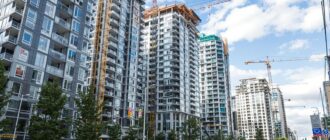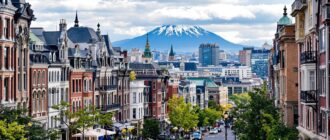

I’m just reading an interesting paper published this year by UBC law professor Douglas Harris about the rise of the condo in North American and particularly Vancouver.
As of the 2006 census, he noted, 37 per cent of all residents of Vancouver lived in a strata condo. I can only imagine what the percentage will be when the 2011 census numbers come out.
As Professor Harris points out, this new form of property ownership essentially altered the landscape of Vancouver irrevocably.
I noticed some of you talking about the inherent flaws of condo ownership and alternatives that might provide more (and better) choices.
Love to hear more on that. I’m also curious about whether anyone has had an experience with a condo building that’s come to the end of its life and where all the owners have had to agree on what to do next. (Seems like IanS might know something about this.)
Professor Harris’s research illuminates one of the most profound urban transformations in North American history. Vancouver didn’t just embrace the condominium—it pioneered an entirely new model of city living that fundamentally reshaped how we think about urban property ownership, community formation, and the very nature of home.
The numbers tell only part of the story. With approximately one strata parcel for every five Vancouverites by 2006, the city had become a laboratory for high-density living that maintained livability—what planners now call “Vancouverism.” This wasn’t merely a housing trend; it represented a wholesale reimagining of urban life that emerged from unique circumstances in Vancouver’s development.
The transformation began in earnest during the 1970s and 1980s, as former industrial areas like False Creek, Coal Harbour, and Yaletown were converted from decaying waterfront industrial zones into gleaming residential communities. These developments didn’t just provide housing—they created entirely new neighborhoods where none had existed before, complete with parks, seawalls, and urban amenities that became the envy of cities worldwide.
The legal framework enabling this transformation was equally revolutionary. British Columbia’s strata property legislation created a sophisticated ownership structure that allowed individual ownership of units within collectively owned buildings. This legal innovation solved the fundamental puzzle of high-density living: how to provide the security and autonomy of individual property ownership while sharing common spaces, infrastructure, and governance.
Yet the condo boom also introduced complexities that continue to challenge Vancouver residents today. Strata governance requires owners to function as both individual property holders and collective decision-makers, often leading to disputes over everything from pet policies to major renovations. The monthly strata council meetings, special assessments, and bylaws enforcement that seemed minor inconveniences when buildings were new have become significant issues as Vancouver’s condo stock ages.
The end-of-life question you raise represents an emerging crisis that few anticipated when the condo boom began. Buildings like the Twelve Oaks complex near Vancouver General Hospital illustrate the challenge: when a three-storey, 30-unit building reaches the end of its useful life, owners must collectively decide whether to invest in major renovations, accept dissolution, or attempt redevelopment. The legal requirements for terminating a strata corporation—requiring 80% owner approval—mean that even a small minority of owners can block decisions, potentially trapping everyone in deteriorating buildings.
These challenges become particularly acute for Vancouver’s earliest condo buildings, now reaching 40-50 years old. Unlike single-family homes where individual owners can make independent decisions about renovations or replacement, condo owners must achieve consensus among dozens or hundreds of neighbors. The democratic ideal of collective ownership becomes complicated when facing expensive elevator replacements, envelope repairs, or seismic upgrades that can cost individual owners tens of thousands of dollars.
The alternatives you mention deserve serious consideration. Some European cities have experimented with cooperative ownership models that provide more democratic control and long-term affordability. Others have developed sophisticated rental housing sectors that offer security of tenure without the burdens of ownership. Vienna’s social housing program, for instance, houses nearly two-thirds of residents in high-quality rental accommodations managed by the city or housing associations.
Yet Vancouver’s condo transformation also created genuine benefits that shouldn’t be overlooked. The model enabled thousands of people to become homeowners who might otherwise have been priced out of detached house markets. It facilitated the creation of vibrant, walkable neighborhoods that reduced car dependency and fostered urban culture. The financial appreciation many condo owners experienced provided wealth-building opportunities and retirement security.
The environmental implications have been substantial as well. Concentrating population in high-density, energy-efficient buildings near transit and employment centers reduced Vancouver’s per-capita carbon footprint compared to sprawling suburban alternatives. The preservation of surrounding mountains and farmland from development pressure represents a significant environmental achievement.
Looking forward, Vancouver’s condo experience offers both inspiration and cautionary lessons for other cities grappling with housing affordability and urban growth. The success in creating livable density demonstrates that North American cities need not choose between high-rise towers and suburban sprawl. However, the emerging challenges of aging buildings, complex governance, and end-of-life decisions highlight the need for more sophisticated legal frameworks and support systems.
The next phase of Vancouver’s condo evolution may require fundamental changes to strata legislation, professional property management standards, and municipal policies supporting building renewal. Some observers suggest that the 37% figure from 2006 likely exceeded 45% by 2011, making these issues even more pressing for the city’s future.
Professor Harris’s research suggests we’re witnessing not just a housing phenomenon but a new form of urban citizenship—one that requires residents to actively participate in the governance of their immediate physical environment. Whether this experiment in democratic property management can adapt to meet the challenges of the coming decades will significantly shape Vancouver’s urban future.
The conversation you’re encouraging about experiences with buildings facing end-of-life decisions could provide valuable insights into how Vancouver navigates this next chapter of its condo story.