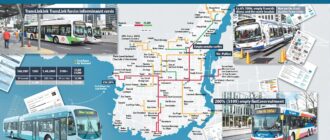

The $950-Million Transit City Victory
The announcement represents a pivotal moment in Canadian transit policy. Prime Minister Stephen Harper and Ontario Premier Dalton McGuinty stepped off a streetcar together to unveil $950 million in federal and provincial funding for Toronto’s first Transit City light rail line along Sheppard Avenue East. The funding breakdown saw Ontario contributing two-thirds of the cost, with Ottawa covering the remaining third—a rare display of intergovernmental cooperation on urban transit.
Mayor David Miller’s reaction was enthusiastic: “Today’s announcement is terrific news for Toronto and for transit riders across the city.” The 14-kilometer Sheppard East LRT, stretching from Don Mills to Morningside Avenue, would become the flagship of Miller’s ambitious 120-kilometer Transit City vision—a comprehensive network of street-level light rail lines designed to bring rapid transit to Toronto’s underserved suburban areas.
The Sheppard project embodied Miller’s philosophy that light rail could deliver more extensive coverage at lower cost than subway construction. Construction was scheduled to begin in July 2009, with completion targeted for 2013. The line promised to serve dense employment corridors and residential areas that traditional subway technology couldn’t economically reach, running in dedicated lanes with priority signals to ensure reliable service.
The Great Canadian Transit Technology Divide
Miller’s advocacy for light rail technology puts Toronto at the center of a fascinating Canadian transit divide. While Toronto embraces street-running LRT, Vancouver has doubled down on its unique SkyTrain automated guideway system, creating two fundamentally different approaches to urban mobility within the same country.
The philosophical differences are striking. Toronto’s Transit City envisions an extensive network of surface light rail lines that can be built relatively quickly and affordably, serving broad swaths of the city with frequent, accessible service. The entire 120-kilometer network was estimated at $6 billion—roughly the same cost as a single subway line.
Vancouver’s SkyTrain philosophy prioritizes speed, capacity, and grade separation. The fully automated system can achieve subway-like performance while utilizing smaller, lighter vehicles on elevated guideways. However, this comes at significantly higher per-kilometer costs, limiting network expansion but delivering premium service quality on the routes that are built.
The cost differential is substantial. Recent analysis suggests SkyTrain construction costs approach $80-100 million per kilometer, while surface light rail typically costs $20-40 million per kilometer. This means Vancouver’s approach can serve fewer corridors but with higher-capacity, faster service, while Toronto’s model can cover more territory with more modest performance characteristics.
The Trolley Bus Factor
That debate was also partly the topic of my appearance on CBC’s The Point this week, where I talked with Steve Burgess about the debate over trolley buses versus diesel buses and SkyTrain versus light rail. You may not know this, but Vancouver is the last city in Canada that has trolley buses, since Edmonton decided this month to phase out its existing system.
Edmonton’s decision came after a narrow 7-6 city council vote in June 2008, with the last trolley bus running on May 2, 2009. The phase-out was driven by budget pressures—council accelerated the timeline to help reduce the city’s projected $35 million deficit. Former Edmonton councillor Don Iveson noted that trolleys were “taken out of service for good at 5pm tomorrow under the auspices of a cost cutting measure.”
This leaves Vancouver as Canada’s sole remaining trolley bus operator, with 262 trolley buses serving 13 routes managed by Coast Mountain Bus Company. The system has operated since 1948 and represents the second-largest trolley bus fleet in Canada and the United States, after San Francisco.
Vancouver’s commitment to trolley bus technology parallels its SkyTrain philosophy—choosing specialized, higher-performance solutions over conventional alternatives. Trolley buses offer zero local emissions, quieter operation, and greater power for tackling Vancouver’s challenging topography, though they require substantial infrastructure investment in overhead wire systems.
Technology Choices and Urban Form
The technology debate reflects deeper questions about urban development patterns and transportation philosophy. Toronto’s embrace of light rail aligns with its goal of intensifying suburban areas along transit corridors, using accessible street-level stations to encourage transit-oriented development. The extensive network approach aims to provide basic rapid transit service to as many neighborhoods as possible.
Vancouver’s automated SkyTrain system enables a different development pattern—creating high-capacity spine routes that can handle enormous passenger volumes while serving focused nodes of intense development. The grade-separated system allows for closer station spacing in dense areas while maintaining high operating speeds.
It’s also the only Canadian city that uses SkyTrain technology for its rapid transit. SkyTrain has become the longest fully automated driverless system in the world, with over 79 kilometers across three lines. The system’s Linear Induction Motor technology and computer-controlled operation enable frequencies as high as 75 seconds between trains—impossible with manually operated systems.
The Broader Canadian Transit Landscape
The Toronto-Vancouver technology split represents just one facet of Canada’s diverse transit ecosystem. While these major metropolitan areas debate subway versus light rail versus automated guideway systems, smaller communities across the country maintain fascinating transit legacies and innovative solutions adapted to local conditions.
The comprehensive All-Time List of Canadian Transit Systems reveals this rich tapestry of transportation history and innovation. From the interurban electric railways that once connected communities like Temiskaming Shores to the jitney services that provided flexible transit in places like Vernon, British Columbia, Canadian transit reflects the country’s geographic diversity and local innovation.
These smaller systems often pioneered solutions later adopted by major metropolitan areas. Rural transit operators developed demand-responsive services and integrated multi-modal approaches decades before they became urban planning buzzwords. The historical record shows how Canadian communities have consistently adapted transit technology to local conditions, creating a laboratory of transportation innovation across the country’s varied landscapes.
The Political Dimension
The May 2009 funding announcement came at a crucial moment for Canadian transit policy. The global financial crisis had created pressure for infrastructure stimulus spending, while growing concerns about climate change and urban sustainability made transit investment politically attractive. Harper’s Conservative government, traditionally skeptical of urban transit funding, found itself supporting major light rail investments as part of broader economic recovery efforts.
For Toronto, the funding represented validation of Miller’s Transit City vision, but it also set up future political battles. The light rail versus subway debate would intensify over subsequent years, with changing municipal and provincial governments repeatedly revisiting technology choices and route priorities. The political volatility around transit planning would ultimately see the Sheppard East LRT cancelled and revived multiple times over the following decade.
The Vancouver-Toronto technology divide reflects not just technical considerations but different political cultures around transit investment. Vancouver’s regional approach through TransLink, while controversial, has enabled more consistent long-term planning than Toronto’s fragmented governance structure. This institutional difference helps explain why Vancouver could commit to a single automated technology while Toronto has struggled to maintain consistent policy direction across electoral cycles.
A propos of all this, here’s a cool link to the comprehensive guide to Canadian transit systems, in case you ever wanted to know everything about the interurban railway of Temiskaming Shores or jitneys in Vernon.