
The suburbs are the most interesting places to watch these days. They’re where people are trying to create new forms of urban life — not the bedroom suburbs of yore, not the traditional cities of the past either. Something new, which no one quite knows what it will be.
My story in the Globe this week looks at how they’re trying to create new downtowns, often with not even so much as a historic old town centre to build from but just out of whole cloth. That prompts the question of, what is a downtown? What makes it work? What are all the pieces you need?
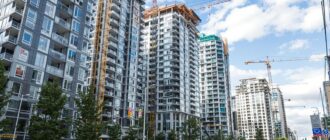
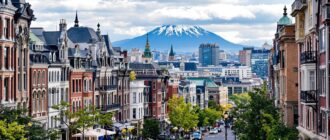
At the moment, too many of them consist of a few large towers or civic buildings next to a transit station and a mall. But they’re all at work trying to figure out how to fill in from there with smaller streets, more mid-rise buildings, more of the kind of variety that older towns naturally produce, where you can have an office building next to some dilapidated one-story building with a tattoo shop next to a historic old bank next to a cool new bar at the bottom of a condo tower.
Surrey and Mississauga in particular are pushing hard to transform themselves, in a time frame as short as two decades they’re hoping.
The suburban downtown experiment represented one of North America’s most ambitious urban planning challenges: creating authentic urban experiences without the organic development patterns that produced traditional city centers over centuries. These communities faced the paradox of manufacturing spontaneity while competing with established downtown cores that offered genuine historical character and accumulated cultural capital.
Surrey and Mississauga’s transformation efforts highlighted the complexity of urban placemaking beyond simple density metrics. Both cities possessed theoretical downtown ingredients—transit infrastructure, civic buildings, residential towers, and commercial spaces—but struggled to achieve the intangible qualities that made downtowns feel alive and authentic. The missing elements proved harder to quantify: pedestrian energy, diverse programming, economic ecosystems, and cultural identity that emerged from decades of accumulated urban experiences.
The challenge of creating variety illustrated fundamental differences between planned and organic urban development. Traditional downtowns evolved through countless individual decisions by property owners, businesses, and residents responding to local opportunities and constraints. This incremental development produced the unpredictable mix of uses, architectural styles, and business types that created urban vitality. Suburban planners struggled to replicate this diversity through top-down master planning processes that inevitably produced more homogeneous results.
Transit-oriented development provided the foundation for these suburban downtown experiments, but transit alone couldn’t generate urban culture. Successful downtowns required critical mass of activity throughout different times of day and week, mixing office workers, residents, students, shoppers, and entertainment seekers in overlapping patterns that sustained diverse businesses and street life.
The two-decade timeframe acknowledged that authentic urban places required patience and evolution that couldn’t be accelerated through planning alone. However, demographic pressures—aging populations seeking walkable environments and young people preferring urban lifestyles—created urgency for suburban communities to offer alternatives to traditional low-density development patterns.
Success would depend on attracting the kind of small-scale entrepreneurs and creative businesses that provided authenticity and character traditional malls and corporate developments couldn’t replicate.