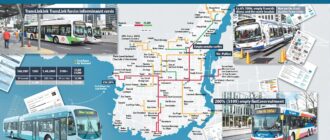

Thought-provoking article from the folks in Seattle analyzing why Vancouver buses get more riders per bus and, more important, why increasing bus frequency typically does not automatically mean more bus riders. (You can bet TransLink planners are looking at this kind of research while they figure out which bus routes they’re going to scale back on which to increase as they try to do more with existing dollars in the next year.)
The Seattle Transit Blog’s analysis, sparked by urban planner Zach Shaner’s comprehensive comparison, reveals fundamental differences in transit philosophy between the two cities. Vancouver’s approach prioritizes frequent all-day service on core routes, while Seattle spreads resources across extensive peak-only commuter routes and broader geographic coverage.
Shaner’s research highlighted a crucial insight: Vancouver creates what he called “transit intuition” – riders can confidently navigate the system without extensive planning. This stems from TransLink’s focus on consistent, reliable service patterns that operate throughout the day, rather than complex timetables that vary dramatically between peak and off-peak periods.
The counterintuitive finding that frequency alone doesn’t guarantee ridership challenges conventional transit planning wisdom. Seattle’s extensive network of infrequent routes actually discourages ridership by making transfers unreliable and forcing passengers to plan around rigid schedules. Vancouver’s strategy of concentrating service on fewer, more frequent routes creates a network effect where the whole system becomes more useful.
This analysis proved prescient for TransLink’s budget constraints. Rather than cutting service uniformly across all routes, the research suggested that strategic consolidation – eliminating underperforming routes to boost frequency on core corridors – could actually improve overall system performance while reducing costs.
The implications extend beyond these two cities, offering a blueprint for transit agencies worldwide facing similar resource allocation dilemmas.